After two years as a shlicha, I can say with certainty that these have been the most rewarding, challenging, transformative, and diverse two years of my life.
As I prepare to leave, I want to put into words two lessons that I am taking with me: one about Judaism, and one about community.
My shlichut has been a personal, professional, and an identity-shaping journey. Moving away from everything familiar and building a life in a different country, surrounded by a different culture, religion, and set of traditions, forced me to look closely at the foundations I had built for myself until then.
The First Lesson: Being in a Jewish State vs. Being Jewish in the States
One of the biggest identity questions I encountered during my shlichut was surprisingly simple: How do I express my Judaism here?
I am secular. Being secular in Israel and being secular in America are two very different experiences.
In Israel, Judaism exists all around you, whether you actively practice it or not. It is woven into the public sphere, the calendar, the streets, the school system, and the sounds of the weekend. You don't necessarily have to make a conscious choice to participate in Jewish life.
Here it is different. When Judaism is not naturally present in the public sphere, preserving it requires you to intentionally bring it into your life. And often, the most accessible way to do that is through religion: going to synagogue, celebrating religious holidays, praying, and participating in religious rituals.
I did not grow up that way. I didn't grow up going to synagogue. I don't know all the prayers by heart. I don't know the melodies that are familiar to many American Jewish communities. And at times, I found myself sitting in synagogue feeling like I didn't quite belong. Partly because this simply isn't how I have historically expressed my Judaism. And partly because even the things that were supposed to be familiar sounded unfamiliar when sung to a different melody. So, I had to go deeper and ask myself: What does my Judaism actually look like?
Let me take you through my Friday in Israel. Imagine Friday morning. Most of the country is either off work or working a shorter day. Everyone is preparing for Shabbat—whatever Shabbat means to them. Students arrive at school dressed in white. Soldiers make their way home on buses. The streets fill with people carrying flowers, groceries, challah, and food for Friday night dinner.
You can feel it. The country slows down. There are fewer cars on the roads, fewer stores are open, and streets become quieter. An entire country collectively takes a breath. And you take that breath with it.
My mom and I drive to Tel Aviv and walk along the beach. We sit by the water with a beer and some watermelon, talk heart-to-heart, and breathe. Then we continue to the Carmel Market, our favorite place, and buy everything we need for Friday night dinner.
The Jewish Observer is published by The Jewish Federation of Greater Nashville and made possible by funds raised in the Jewish Federation Annual Campaign. Become a supporter today.
We go home and start cooking. My mom cooks, I clean. I cook ,she cleans. We dance around the kitchen, Israeli music playing in the background, and somehow, without even realizing it, we reset from the week we've just had.
And then comes Friday night dinner. Family, food, noise, laughter, and stories. No prayers but a lot of love. After dinner, we usually meet up with friends. That is my “Shabbat.” It is a time for deep conversations, cleaning, cooking, family, friends, and breathing.
I realized that this is also Judaism. During my time here, I was introduced more to Conservative and Reform Judaism and came to understand how important these movements are in today's changing Jewish landscape.
As a secular Jew, I still don't necessarily find my natural home inside a synagogue. But perhaps I would feel differently if I had grown up in an environment where these forms of Judaism were part of the mainstream.
In Israel, many secular Jews grow up with an equation that feels almost automatic: Judaism = Orthodoxy = everything or nothing.
But Judaism is so much bigger than that. Through understanding where I felt disconnected, and imagining the life and family I hope to build one day, I came to understand something I had never fully appreciated before: The enormous power in living in a Jewish state.
The Second Lesson: Community
For the first time in my life, I truly understood what it means to be part of a minority.
And with that came a new understanding of how much community matters when it comes to preserving identity.
One of the things that fascinated me most was how easy it can be to find a connection.
All it took was one question: “Are you Jewish?”
You meet someone randomly at a bar, discover they were Jewish, the conversation would immediately turn into Jewish geography. Because of course, you probably know someone I know. And suddenly, we had a connection.
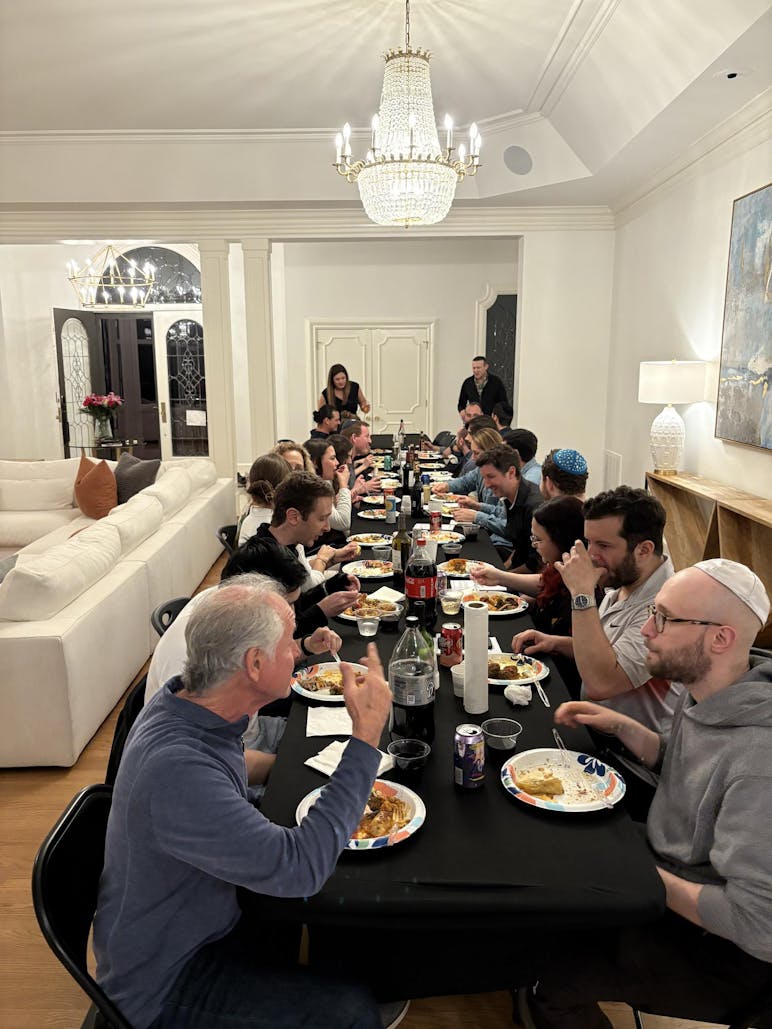
People came to my Shakshuka nights every Wednesday regardless of whether they actively practiced Judaism or not. Whether they had a degree or not. Whether they were from the East or West Coast. Whether they were 20 or 30. Whether they even liked Shakshuka. They came because the community was there. They came because one important piece of identity already connected them.
In Israel, we all share the broader identity of being Israeli. But because that commonality is so broad, we look for another layer of connection: Did we serve in the same military unit? Do we have the same hobbies? Do we work in the same field? Did we go to the same school? Do we share the same political or social interests?
Here, I discovered friendships that I have never experienced in Israel. They were simple. They were warm. They were loving. There was something almost effortless about them. You are part of the family, and therefore you are my friend. I hope I can bring that simplicity back to Israel.
To the Nashville Jewish community, thank you. I came to Nashville to bring pieces of Israel with me, but Nashville gave me pieces of itself in return.
Thank you for giving me a place to grow personally and professionally. Thank you for trusting me with your stories, your questions, your celebrations, and your community. Thank you for giving me the opportunity to share my passion and love for Israel. I will carry Nashville with me wherever I go next.
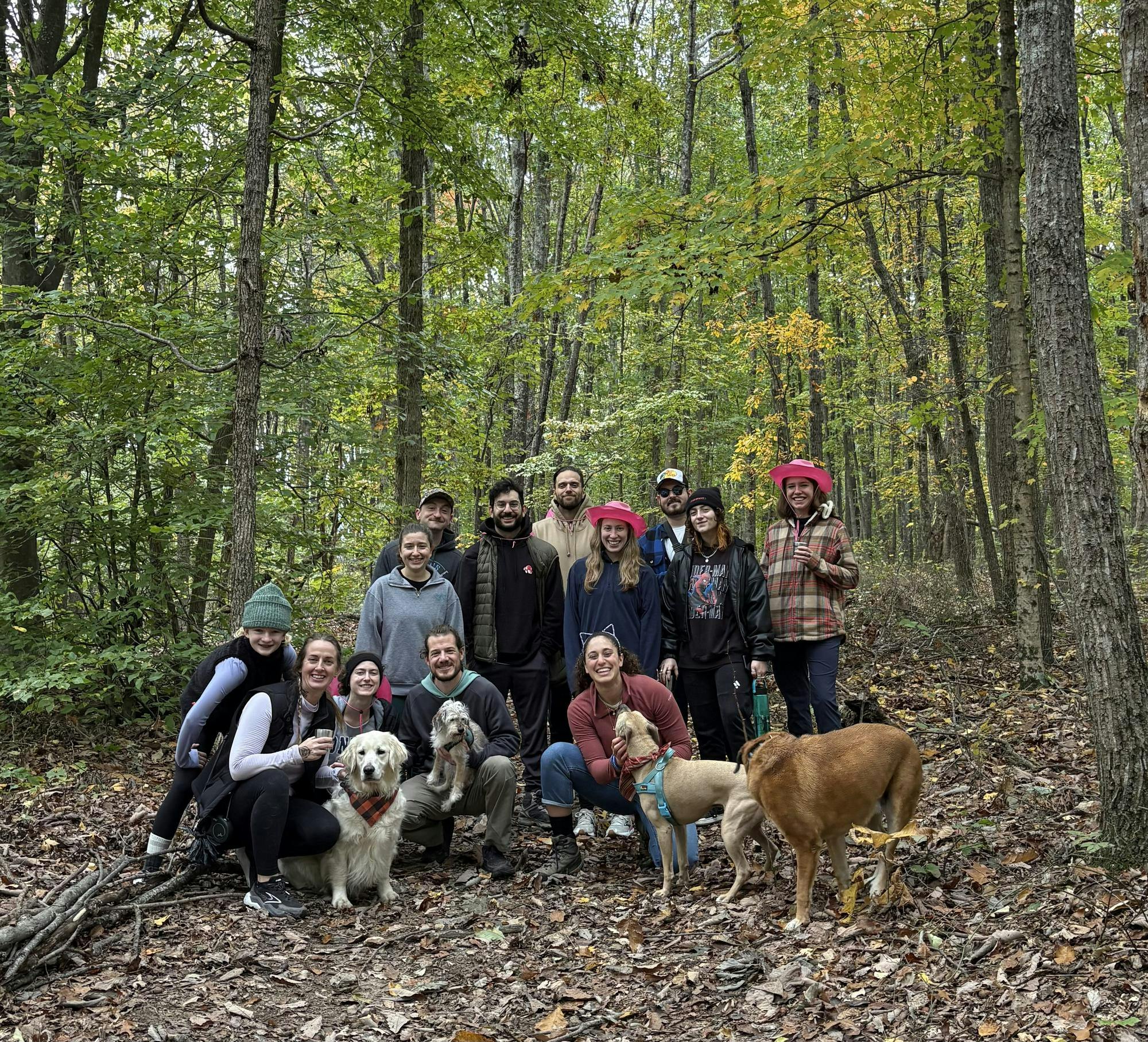
The people, friendships, laughter, Shakshuka and hikes, the questions, challenges, and moments changed me in ways I didn't expect. When people ask me what I learned during my shlichut, my answer is always the same: I went to a university of life.
So, as we say in Hebrew when we say goodbye, “Shmor al kesher” - Keep the knot.
You’ve become a knot in the fabric of my life, one I’ll carry with me forever.