
“These were people who were regular people. It’s like you and me, and they really changed the world,” said Shaul Kelner, professor of Jewish Studies and Sociology at Vanderbilt University.
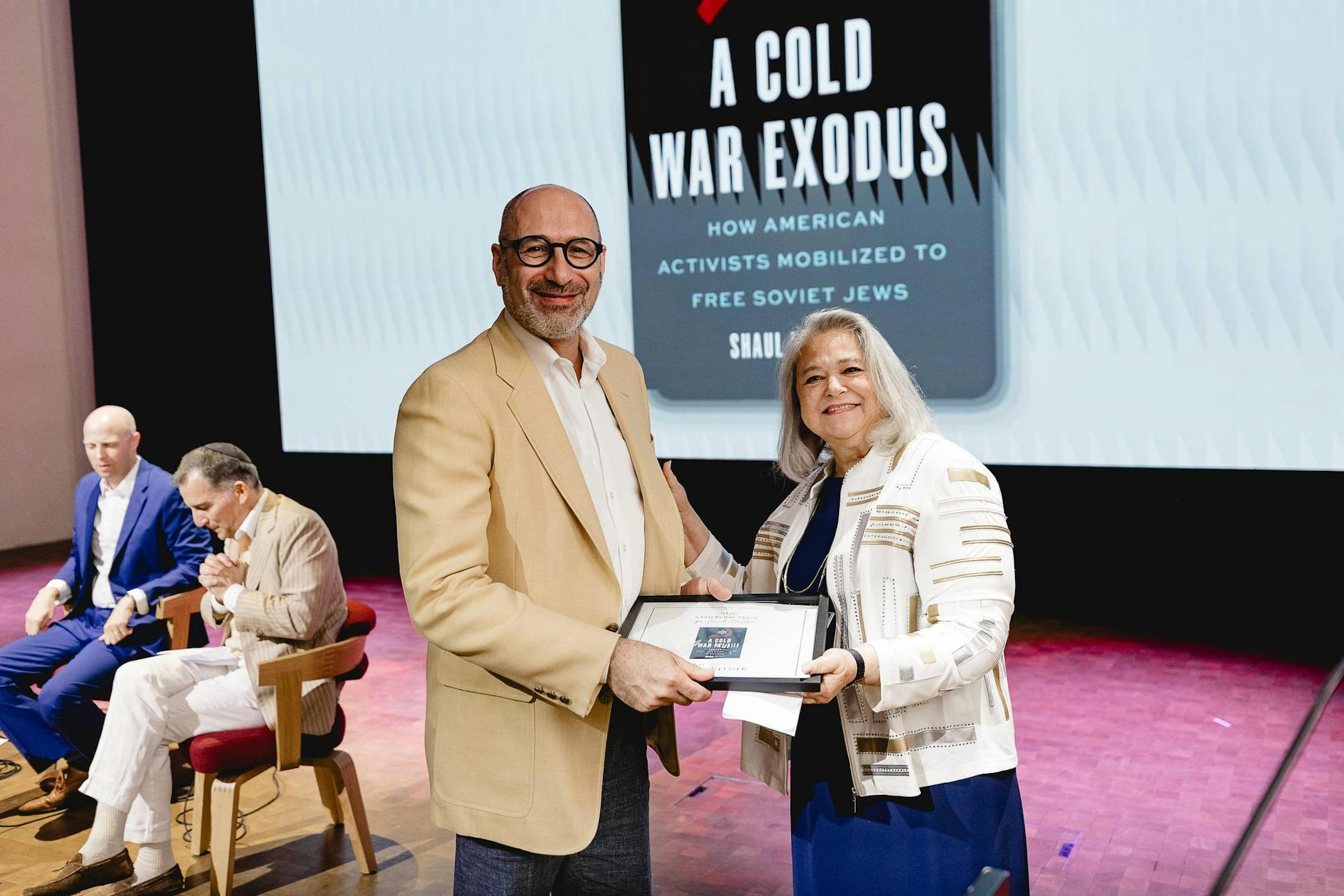
That idea is at the heart of Kelner’s A Cold War Exodus: How American Activists Mobilized to Free Soviet Jews, which was recently named a finalist for the Sami Rohr Prize for Jewish Literature, a highly selective honor recognizing emerging writers and the breadth and depth of Jewish storytelling.
Unlike other literary awards, the Sami Rohr Prize does not accept submissions. Books are identified and vetted by the prize team before advancing to a panel of distinguished judges, making selection as a finalist a significant honor.
Published by NYU Press in 2024, Kelner’s book examines how American Jews organized on behalf of roughly three million Jews living behind the Iron Curtain. Through grassroots organizing, they brought attention to the plight of Soviet Jews, mobilized American Jews and helped pressure political leaders to act. Kelner calls it “the largest political mobilization of American Jews in American Jewish history” and one of the few successful human rights campaigns.
The recognition recently brought Kelner to Jerusalem, where he joined fellow finalists and past winners at the National Library of Israel for the award ceremony and a two-day institute. Finalists become part of an international community of writers, scholars and thinkers who gather and learn from one another.
For Kelner, the gathering offered a chance to connect with writers outside the world of academia.
“It’s not been an easy time for Jewish writers,” Kelner said. He described the gathering as a place where writers could “exhale” and talk about their work.
Kelner’s interest in Soviet Jewry goes back to his graduate school years, and he has worked on the book for more than a decade.
“The more that I studied it, and the more that I spoke to activists, the more excited I got about the project,” he said.
For many American Jews who grew up in the 1970s and ’80s, the Soviet Jewry movement was woven into everyday Jewish life.

“You could not grow up Jewish in the ’70s and ’80s without being exposed to or involved in some way in the fight for Soviet Jews,” Kelner said.
The movement was remarkable not only for its scale, but for its sense of community.
“Three million Jews, you know, on the other side of the ocean during the Cold War, on the other side of the Iron Curtain, and yet we still felt a commitment,” Kelner said.
He said the book also includes a few Nashville connections, giving local readers another reason to revisit this chapter of Jewish history. The movement’s unity and impact remain striking, especially today, and are part of what makes A Cold War Exodus a compelling read.
The Jewish Observer is published by The Jewish Federation of Greater Nashville and made possible by funds raised in the Jewish Federation Annual Campaign. Become a supporter today.