
As Jewish communities across the country continue navigating a complex threat environment, security leaders are emphasizing a simple message, preparedness can’t wait for an emergency.
That was the focus when Michael Masters, national director and CEO of Secure Community Network (SCN), recently visited Nashville for two days of meetings and events with Jewish community leaders, law enforcement partners and other stakeholders. The visit was hosted by the Jewish Federation of Greater Nashville and included a community town hall, preparedness exercises and the first regional law enforcement working group meeting.
SCN was created in 2004 and serves as a safety and security organization for the Jewish community across North America.
Masters said SCN has grown from a small organization into a national network of more than 130 team members. The organization works with Jewish institutions and law enforcement agencies while sharing threat intelligence with partners.
“We have said for some time that we are facing the most complex and dynamic threat environment to ever face the Jewish community or the country in the nation's history,” Masters said.
For Nashville, being connected to a national network through a local security professional is part of the community's preparedness strategy.
John Curatolo, SCN regional security adviser for the Greater Nashville Area, serves as a liaison between Jewish Nashville and law enforcement. Curatolo, who has more than 40 years of law enforcement experience, said building those relationships before an incident occurs is essential.
“There are pieces of the puzzle in police work,” Curatolo said. “You may have somebody who has done something in a threat capacity in one area, and then they show up at Nashville and they do the same thing. We want to make sure that we're talking to police so they're aware of what's going on and better able to protect people,” he said.
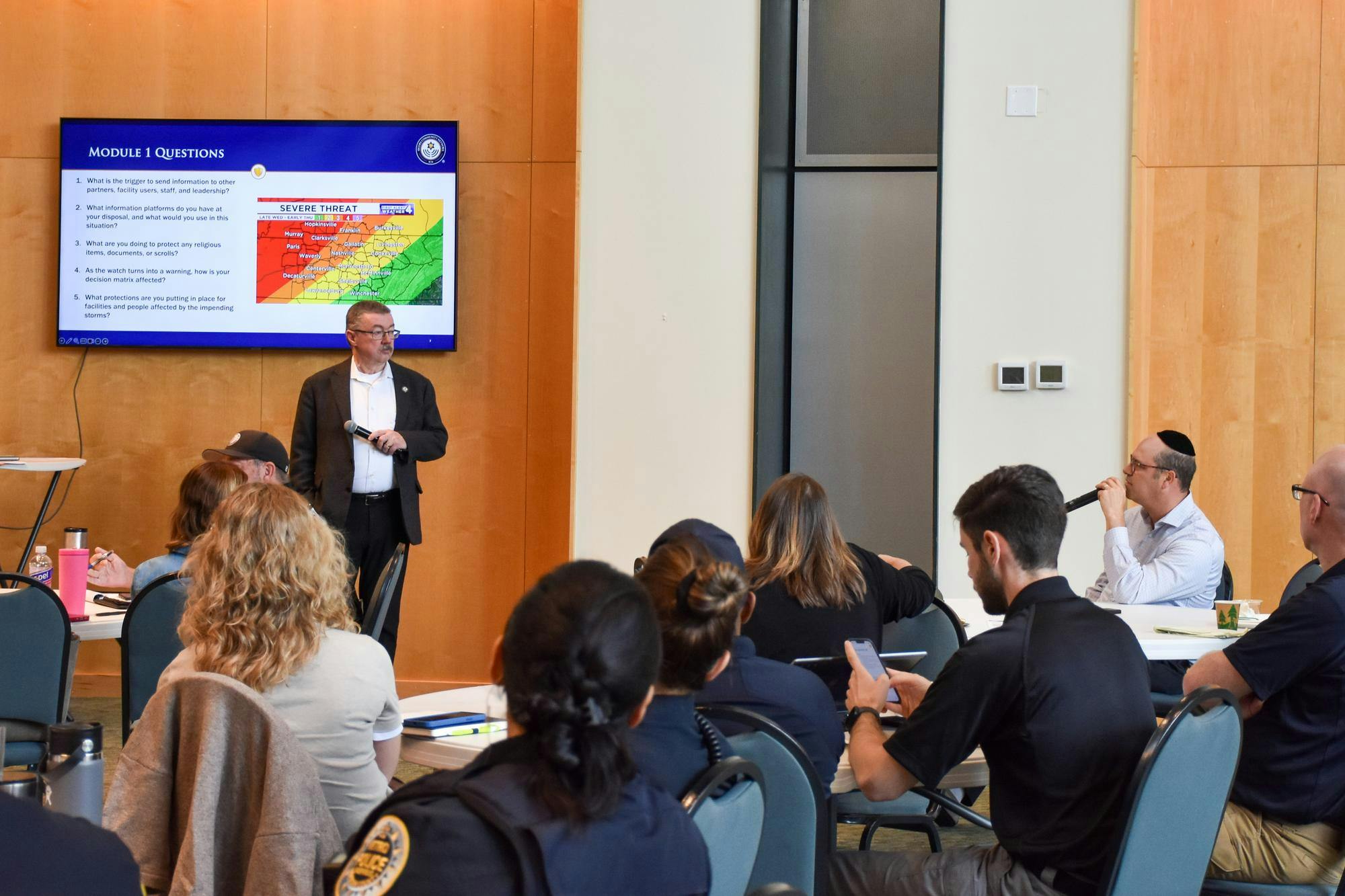
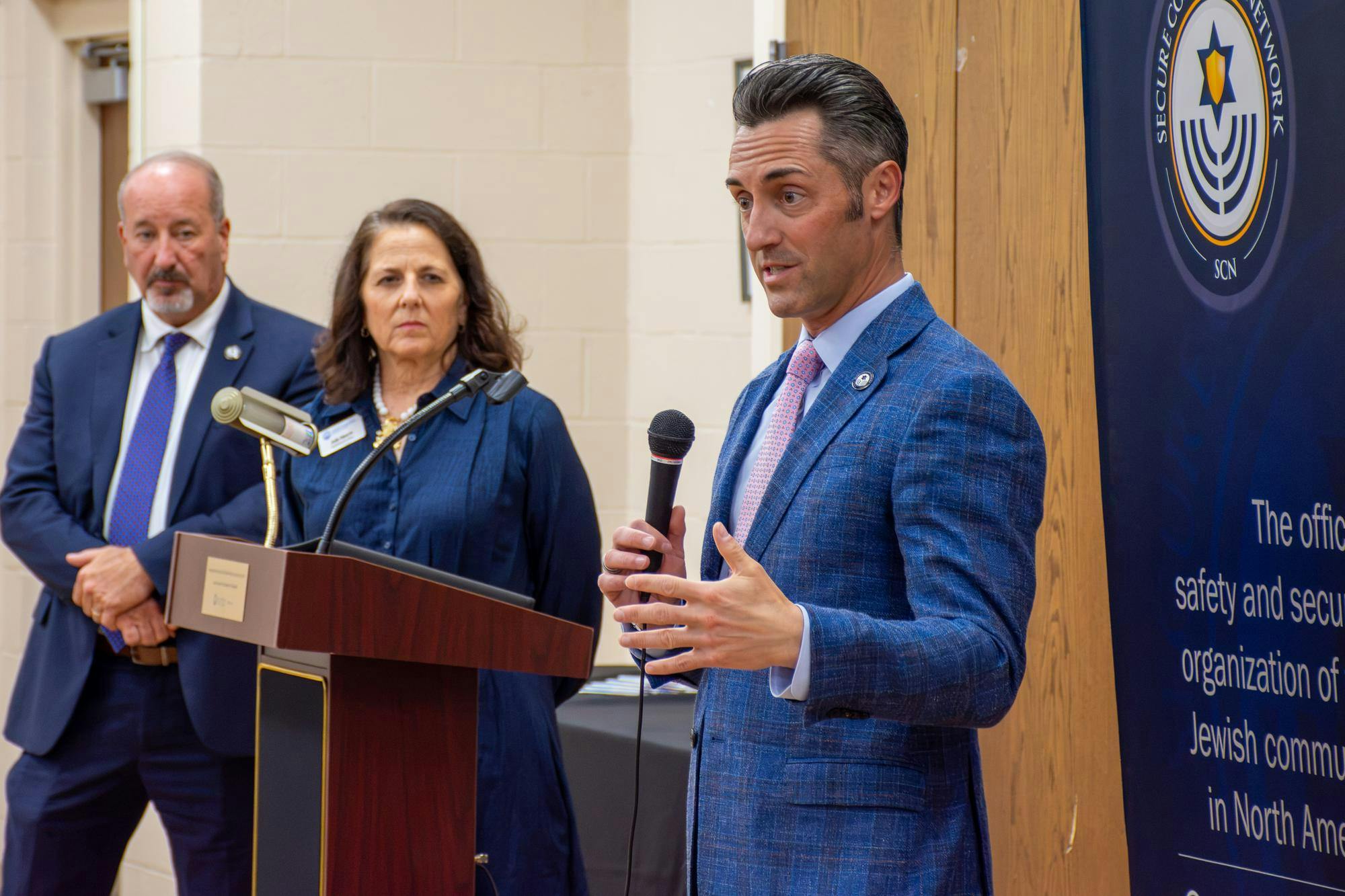
The regional law enforcement working group held during Masters' visit brought out professionals from SCN, Metro Nashville and Mount Juliet police departments, Tennessee Highway Patrol, Tennessee Fusion Center, Tennessee Bureau of Investigation (TBI), and U.S. Department of Homeland Security. Meetings like these are expected to happen at least twice a year, according to Curatolo. The goal is to strengthen information sharing among Jewish community security leaders and law enforcement agencies.
Josh Melton, deputy director at the TBI, attended the working group and said the workshop provides an opportunity for local, state and federal agencies to collaborate. Adding that meetings like these represent a shift from just responding to incidents to proactively addressing potential threats.
"TBI has spent a lot of time in the business of responding to violent incidents that have already happened. We're reactive to those,” Melton said. “It's really important to be able to be proactive in the space of providing a safe place for communities and getting ahead of incidents and threats, so that they never happen to begin with.”
Federation CEO Judy Alperin echoed Melton’s thoughts on a broader scale. Gatherings like these strengthen the connective tissue between our synagogues, agencies, and schools.
“Deepening our relationships with local, state, and federal law enforcement, so they are not names on a card, but true partners,” Alperin said. “And widening our circle of allies, Jewish and non-Jewish, clergy and civic leaders, people of faith and people in public service. Those who stand with us not only when something happens, but every day before that.”
Curatolo said training will be a major focus moving forward, including both in-person and virtual opportunities. He also encouraged community members to report suspicious activity, even when they are uncertain whether something rises to the level of an emergency.
"They need to be reporting things on the website so that it comes to me. Nothing is too big, nothing's too small.”
The tabletop exercises hosted by Congregation Micah were planned prior to Masters’ visit and provided an opportunity for clergy and agency partners to practice responding to potential incidents. Curatolo said the exercises are part of an effort to make preparedness a routine part of Jewish community life.
Masters shared remarks from those who survived attacks at Jewish institutions in Pittsburgh, Colleyville, Michigan and elsewhere.
“What they have shared is that the training and preparedness that happened before the incidents was what ensured that not just that people were safe, but that they stayed alive,” he said.
Masters said Nashville's investment in security is not intended to create fear, but to make it possible for Jewish life to continue without security becoming a barrier. He described preparedness as an investment in the future of the Jewish community.
The Jewish Observer is published by The Jewish Federation of Greater Nashville and made possible by funds raised in the Jewish Federation Annual Campaign. Become a supporter today.
“Investing in security is a down payment on a Jewish future,” Masters said. “It's like your car insurance. You can't buy it the day after the accident.”
To report an incident, visit www.jewishnashville.org/security