
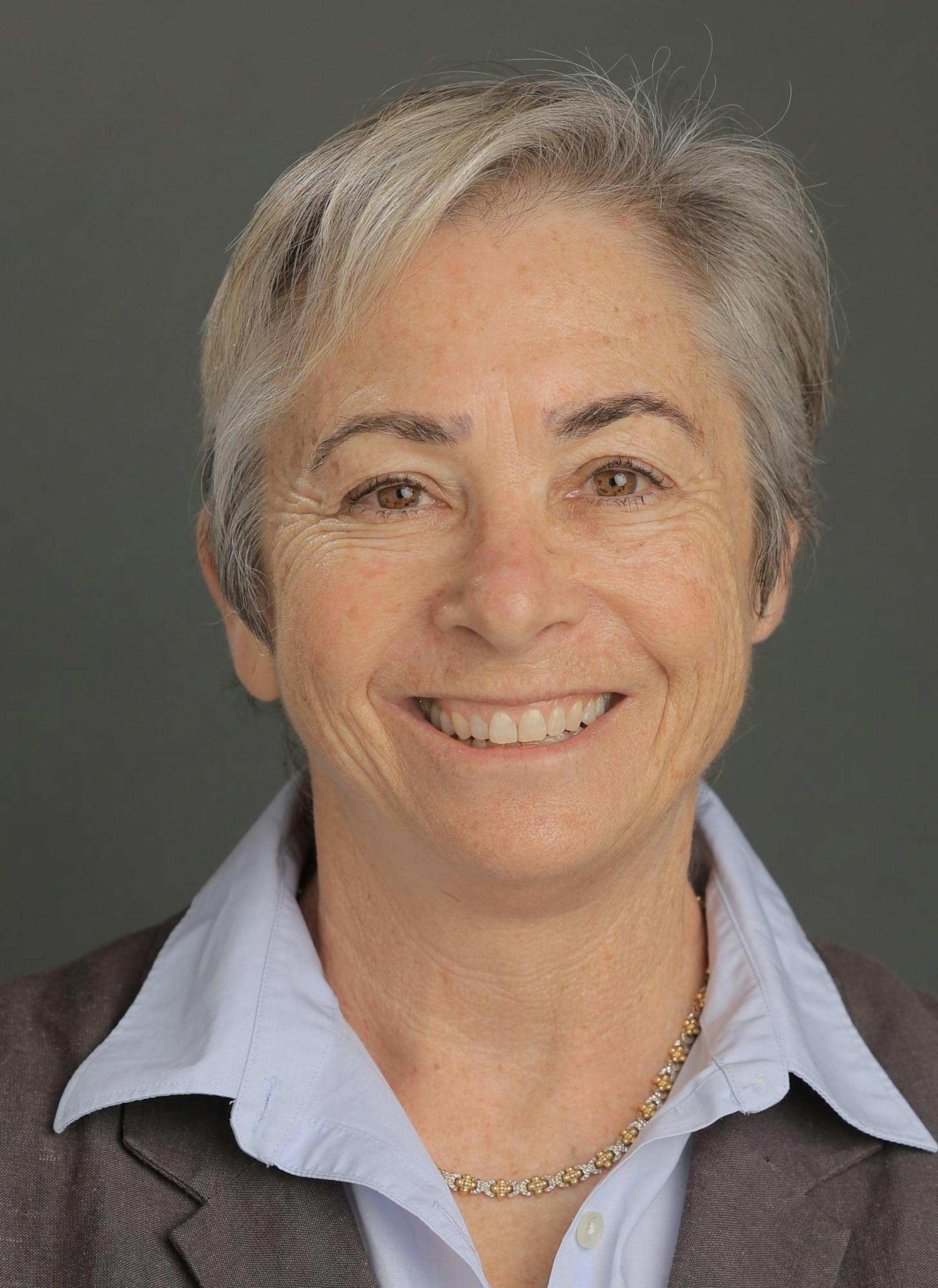
Some would say there is no such thing as a crystal ball. But retired IDF Colonel Miri Eisin is going to try and use one when she comes to Nashville on February 10th as part of Jewish Federations of North America’s Israel in Focus speaker series. Eisin’s plan is not to revisit recent history, but to look forward. “I’m going to open my crystal ball, which I don’t own, and I’m not going to give a history lesson, we’ve just lived through that. I’m going to try and describe where it takes us looking into 2026.”
The focus on Israel, says Eisin, is threefold. “One aspect is looking at Israel and the Palestinian arena in general. It’s not just the Gaza strip, it’s not just Judea and Samaria, because it immediately takes us into the world of, ‘From the river to the sea,’ and ‘Globalize the intifada.’”
The second aspect is looking at what Eisin calls, “the new Middle East.” She says it is a direct result of the Hamas’s war. “When I say Hamas’s war, Hamas started it and immediately a lot of additional elements joined in.” She says as a result the Middle East is completely changed. “It’s leaderships, alliances. And looking into 2026, one odd example is that the United Arab Emirates announced that they’re not going to fund UAE citizens’ studies in the UK because in the UK they may be radicalized in a way that won’t happen in UAE.”
Eisin plans to view the Israeli/Palestinian challenges through both Israeli eyes, her own perspective, and through Palestinian eyes. And in her view of the new Middle East, she says it is important to also consider the broader impact. “It’s no question that the Shiite Crescent has been hurt. Look at what’s happening in Iran right now. It’s not just because of what went on in the last two and a half years. But that certainly amplified voices where the voices inside Iran are saying we don’t have water, we don’t have electricity. All you’re doing right now is nuclear Gaza and Hezbollah.”
This is all part of what she describes as changing alliances in the region in ways not seen before. “Now we’re talking about the very challenging Turkey and Qatar that we never talked about like that before. And the hinge in between Turkey and Quatar, there are two of them. One is Gaza. The second is Syria.”
Eisin says the regime change in Syria is one she looks at with some skepticism, while admitting most people view it as a step in the right direction. “Most people look at regime changes and go, ‘yay,’ and I look at regime changes and go, ‘Yay, but.’” She concedes anything is better than the Assad regime, but that doesn’t mean the new regime is good for Israel in the aftermath of October 7th.
The third consideration looking toward 2026, says Eisin is in the midst of all the change, what has stayed the same. “The Palestinian issue is not going away. The new Middle East with all this change from the Shiite to the Suni is very different. But a lot of the major woes that the different countries have to face, including Israel, still exist.”
Eisin emphasized some of the fundamental differences between Israel and the US, chief among those is Israel’s Socialist society, which sets up a major cultural divide. “What you have throughout Israel and the greater Middle East is what you call group or community identity, which has always existed here.” She references what are called “tribes” meaning groups like secular Jews, Haredi, Arabs, and so forth. She says each group has a strong identity, and among those are the youth populations, also looking for their place.
Looking at current changes to the world order and how it affects American Jews, Eisin says she takes the long view. “I’ve seen the gradual extreme polarization that happened inside the United States. I was already talking about the polarization in the United States in 2000.” She describes the continual swinging of the pendulum from one side to the other as administrations change. She says the polarization is not unique to the US. “It exists in the UK, it exists in France, it exists in Germany, it exists all over Europe.” She adds it exists inside Israel as well.
When it comes to recent developments between the US and Venezuela, and the US and Greenland, Eisin says it illustrates something deeper. “The world in general, and this isn’t states it’s individuals, looks at war with two different eyes, and they have for many years post-World War II, and post-Cold War. You look at a war through security eyes, and you look at a war through humanitarian eyes.” She stresses this is not a values-based analysis, but rather it is more pragmatic. “A lot of Europe looks at wars through humanitarian eyes, and some in Europe look at war through security eyes.”
Eisin says she can see both humanitarian and security perspectives. “What it helps is to build bridges in talking with people we don’t agree with.” In taking this approach, she can have conversations with people across diverse sensibilities.
An example of this divide is illustrated in unpacking some of the realities and misconceptions about the conduct of IDF soldiers, Eisin says the same distinction between security and humanitarian priorities applies here. “Question number one, is war moral in the first place? I’m allowed to ask that question. When you talk humanitarian, war is not moral in the first place. When you talk security, war is not great, but it’s moral.”
The question of what is legal is a different issue. “Everything we do is legal. And if it isn’t, we call it out, not anybody else in the world. Being accused is one thing, and I’m distinguishing between moral and legal.” She says most people do not understand the laws of war and what is allowed in defense. “When I talk my security and legalese, everybody who talks humanitarian is not listening, disagrees with me, and rejects from the beginning everything I say.”
On the personal front, Eisin says there have been major changes since she entered the service in 1980. At that time there was a separate corps for women, including the officers’ course, both since cancelled. She says the gradual evolution involved taking an objective look at what the army considered a human resource and finding the best use for each resource, regardless of sex.
The Jewish Observer is published by The Jewish Federation of Greater Nashville and made possible by funds raised in the Jewish Federation Annual Campaign. Become a supporter today.
Eisin’s three adult children, all officers in the IDF, experienced this more modern approach to IDF service. “I have boy, girl, boy, and when they were drafted, it was the exact same for the three of them. And the service has been the same for the three of them.” She says it was her daughter who was in a fighting brigade in the recent war as an intelligence officer, while her sons were in Tel Aviv.
Eisin says it was her fluency in English and French that propelled her through those initial ranks. “Immediately I was drafted into intelligence, and immediately I was different from all of my friends. And I managed to get into officers’ course which at the time out of 150, there were 135 men and 15 women. That was in 1982.” She says when her daughter and son completed their officer training in 2021, it was about half men and half women. “For me, my entire career was being the only woman in the room, and every single position I did, it was the first time a woman had done it.” She adds that it took years before another woman would be considered for those same positions. “There still is a glass ceiling. It’s gone up quite a bit, but it still exists.”
The upcoming event is scheduled for February 10th at 7pm. To learn more and to register, visit www.jewishnashville.org/Israelinfocus. Location will be announced upon registration.