
He woke up to a message from a friend that read, “I’m so sorry.” Curious about what this friend could be apologizing for, Danny Finkelstein went to a family group chat, and messages had been pouring in while he was asleep in Nashville.
Fifteen people killed after two gunmen open fire during a Chanukah celebration at Sydney’s Bondi Beach.
"I woke up to the news like, holy shit. It was devastating, absolutely devastating,” Finkelstein said. “That's my family. Sydney is my Jewish connection because that's where my cousins were, the cousins that I knew were Jewish.”
Finkelstein grew up in Cairns, Australia, located in far North Queensland and known for the Great Berrier Reef. He said he didn’t find out he was Jewish until he was a teenager.
“My parents are hippies, and they just didn't mention it. They weren't trying to specifically hide it. They were Orthodox Jews before they were hippies, they were coming of age in the 60s and 70s, so they got a Volkswagen van and traveled around Europe, even Israel and sort of found a spiritual awakening in their own kind of new age thing.”
He said while they had cousins in Sydney, they were one of the only Jewish families in Cairns. One day he asked what their last name meant and that’s when his parents told him they were Jewish. The news of Bondi Beach was personal for Finkelstein, and he said the start of the week was emotional.
“It messed me up beyond belief,” he said. "I found out that the photographer at my nephew's bar mitzvah, that I was at last year in Sydney, was killed. He was an ex-police officer, who became a photographer, and he was doing it as a volunteer for the Chabad there, and he was he was murdered. It was close to home.”
Finkelstein moved to Nashville two years ago and said that decision became a catalyst for many things in his life. As a musician, he’s been able to find opportunities here, see a different part of the world, and meet new people.
“One of the big things I realized was just how deeply antisemitic Australia was and maybe still is,” he said. “You know, tinnitus? Where you have a ringing in your ear? And you just don't notice it. Then it's gone all of a sudden and you're like, I can hear everything so clearly. Because it (antisemitism) just wasn't here.”
Finkelstein said he felt like he was able to let his guard down a bit and began getting involved in Jewish programing with East Side Tribe and hosting his own Shabbat dinners. These connections he made, both Jewish and non-Jewish are who stepped up when news of Bondi Beach made its way stateside.
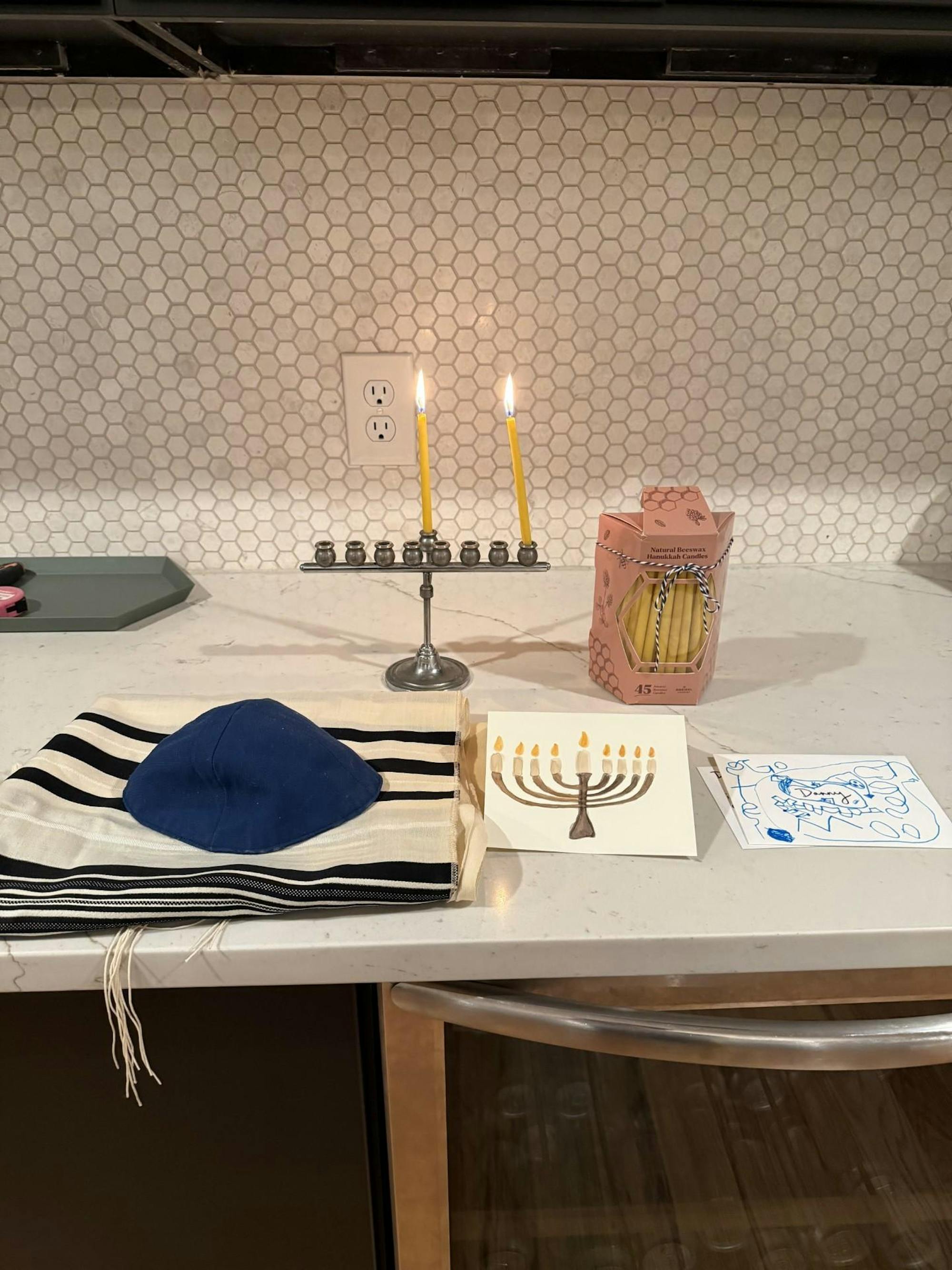
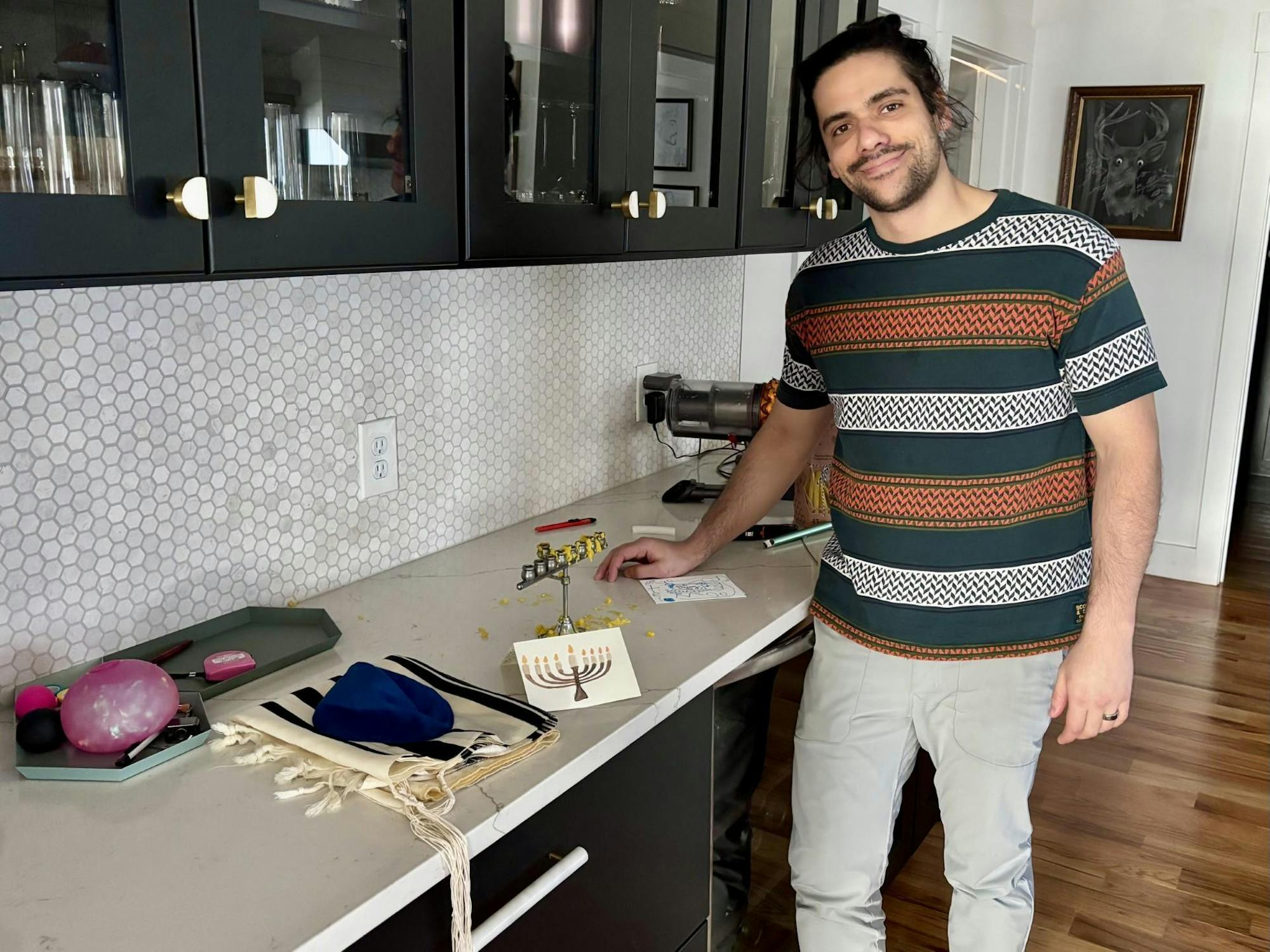
For their wedding, Finkelstein and his wife were gifted his grandmother’s menorah that his grandfather made. On a recent trip back to Australia, he received his grandfather’s tallit and father’s kippah.
“Having all of those, I was like, I need to do Chanukah this year. I've never done it before. I don't know the prayers. I guarantee you I'm pronouncing them wrong, but I've donned my yarmulke, I’ve donned my tallit, and it felt like I was really bringing home with me and lighting up my space. And it was beautiful.”
That evening, his close friends came by with a handmade card and joined him for the lighting of his grandmother’s menorah, for the first time.
“They're Christian. But it was really nice to be accepted. There was a lot of crying,” he said.
As the week went on Finkelstein chose to attend events and be with his Jewish community here, and more people joined him at his home for his menorah lighting. While every moment wasn’t easy, he said people really cared about him.
“I think it was nice to be there as a conduit for Australians so that the Jewish community in Nashville could grieve with me,” he said. “Because Jews everywhere are grieving and sometimes it's nice for people to be able to reach out and hug someone from Australia and say, ‘Hey, we're with you.’”
The light of the Chanukah candles reminds us of the light we can be. Finkelstein said for him, he wants to be an example of what he hopes to see in the world. Another step he took in taking pride in his Judaism was purchasing a Magen David, which he says he now wears proudly.
“It's not a rebellious act to show up. We're going to show up anyway. It's despite the stuff that's happening, we're still going to be ourselves, and I think we simply wouldn't be ourselves if we stopped just because things are going badly,” he said. “That's not how we survived. I mean, the fact that Judaism still exists is crazy. It's this dynamic between a persecution and this almost pigheaded resilience to just keep being what we are, which think created this amazing community.”
The Jewish Observer is published by The Jewish Federation of Greater Nashville and made possible by funds raised in the Jewish Federation Annual Campaign. Become a supporter today.